



✦ Veteran-Owned Minority & Woman-Owned Certified Master Inspector IICRC Certified Firm

Emergency property help: (512) 838-4236

24/7 emergency water damage · Jonestown, TX

Water Damage Restoration in Jonestown, TX

Burst pipe, leak or flooded floor? We answer 24/7, extract the water, dry the structure with moisture readings you can see, and rebuild—one IICRC Certified Firm from the first call to the final walkthrough.

Answered around the clock. Anthony Schlessinger, IICRC WRT and Certified Master Inspector, is on-site for every job.

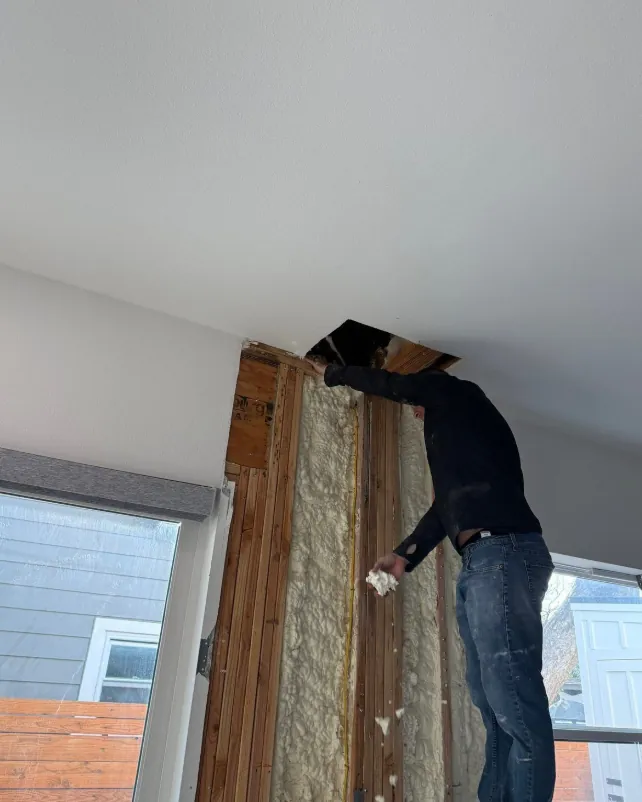
Restoration technician removing wet insulation from an opened wall during water damage restoration in Jonestown, TX
Wet insulation comes out; the framing gets dried, not covered up. We open only what the moisture readings say is wet.
IICRC Certified Firm seal
IICRC Certified FirmIICRC
Certified Master Inspector badge
Certified Master InspectorInterNACHI
Veteran-Owned Business badge
Veteran-Owned
Minority and Woman-Owned business badge
Minority & Woman-Owned
Google reviews graphic
Google ReviewsRead our reviews →

Request a water damage inspection

Water in your Jonestown home? Tell us what happened.

Share the property details and we will follow up. For active water, calling is faster.

Call (512) 838-4236 →

Who shows up at your Jonestown property

A husband-and-wife team—not a franchise call center.

We have inspected homes since 2007 and run water and storm restoration since 2014—side by side. That is why our restoration starts with an inspection, and why your claim paperwork reads like an inspector wrote it.

Anthony Schlessinger, co-owner of Austin Remodel and Restoration, IICRC WRT and InterNACHI Certified Master Inspector

Anthony Schlessinger

Co-Owner · IICRC WRT · InterNACHI Certified Master Inspector

  • On-site for every job. Anthony collects the wet-bulb readings, moisture mapping and daily moisture measurements himself, and inspects the dry-out to make sure it is drying properly and efficiently—moving air movers or adding equipment when the numbers call for it.
  • Inspecting homes since 2007 for real estate transactions and insurance—an InterNACHI Certified Master Inspector since 2014.
  • IICRC Water Damage Restoration Technician (WRT)—trained on the IICRC S500 standard our drying follows.
  • A year of formal electrical, HVAC and plumbing training, so the source of the water gets found, not just the wet spot.
  • Veteran. Used the GI Bill to study home building science—how water, air and heat actually move through a house.

Jessica Acosta-Schlessinger, owner and insurance and claims lead at Austin Remodel and Restoration

Jessica Acosta-Schlessinger

Owner · Insurance & Claims

  • Water and storm restoration since 2014 alongside Anthony.
  • Builds your scope of work. A complete, line-item scope compared against your insurer's loss report—anything missing gets documented and supplemented, so you are not left paying for it.
  • Uses Anthony's readings and inspections to get your scope of loss approved by your insurer.
  • She has been on the other side of a claim. In 2013 a fire took a third of the couple's two-story home—military awards, family photos and personal belongings, gone. Jessica inventoried every item and learned firsthand that a good contractor doesn't always know the insurance documentation and procedures. Your claim gets the knowledge she had to earn the hard way.
  • Cal State Fullerton graduate, and the first in her family to earn a college degree.
  • Minority Female Business Owner, and your point of contact on the paperwork from the first call to the final walkthrough.

If water is spreading right now

Five things to do in the next ten minutes.

Call (512) 838-4236
  1. Stop the source. Close the fixture's shut-off valve, or the main if you can't find the leak.
  2. Kill power to the wet area at the breaker if water is near outlets or appliances. Never stand in water to do it.
  3. Stay out of dirty water. Sewage and outdoor floodwater are Category 3—no bare skin, no household vacuums.
  4. Photograph everything before you move it. Your insurance claim starts here.
  5. Call us, then your carrier. Most policies expect you to prevent further damage, so drying can start before an adjuster arrives.

Water damage in Jonestown

Why water damage spreads in Jonestown homes.

Jonestown sits on the north shore of Lake Travis along FM 1431, with homes built into hillsides, on lake-view lots and on rural acreage. Slopes, limestone, exposure to hard freezes and homes that may sit empty for stretches give a leak plenty of room to spread before anyone notices.

  • Hillside runoff and drainage

    Many Jonestown homes sit on sloped limestone lots above Lake Travis. Heavy rain moves fast downhill, and poor grading, gutters or retaining walls can push water against foundations and into lower levels.

  • Burst and frozen pipes

    Hilltop and lakeside homes in Jonestown catch the full force of a hard freeze. Winter Storm Uri in February 2021 split pipes in attics, exterior walls and crawlspaces across the Lake Travis area.

  • Aging plumbing and water heaters

    Older lake-area homes often still have original supply lines, valves and water heaters that are past their service life—and a slow leak can run for weeks in a home that is not occupied full time.

  • Attic HVAC condensate

    A clogged condensate line or overflowing drain pan on an attic air handler can quietly soak the ceiling below through a long Texas cooling season.

  • Hail, wind and storm-driven rain

    Exposed hilltop homes take the brunt of Central Texas hail and wind, which damage roofs, windows and siding and let water into walls and ceilings.

Find it before you dry it

The water you can see is rarely all of it.

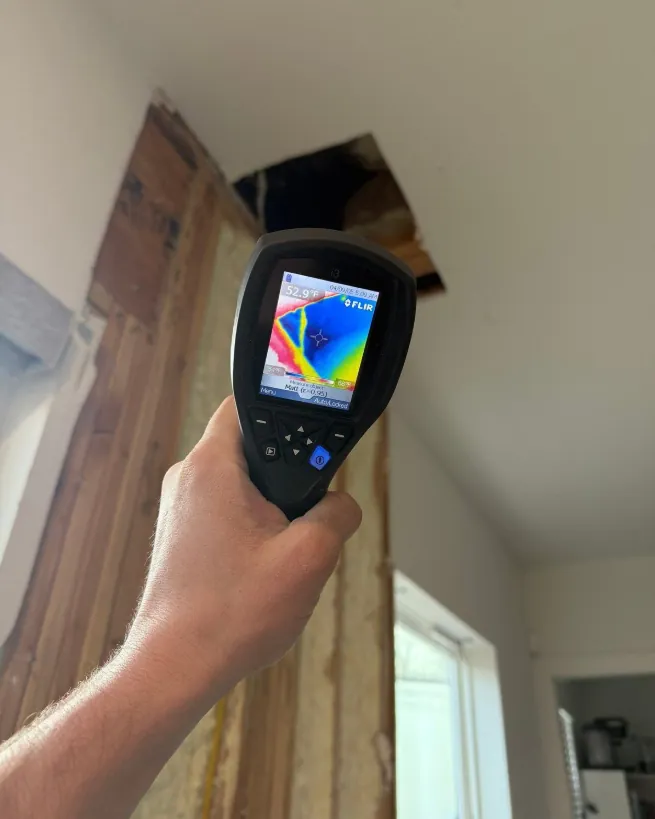
Water follows framing, wiring and gravity into wall cavities, under flooring and into the ceiling of the room below. We map it with thermal imaging and moisture meters before anything is removed, so the scope is based on readings—not on the size of the stain.

  • Thermal imaging to find cold, wet areas behind finished walls and ceilings.
  • Moisture readings logged at the same points every day until materials reach dry standard.
  • Selective removal—flood cuts and insulation only where the readings say.
  • Led by an InterNACHI Certified Master Inspector, so the second source and pre-existing problems get flagged.
FLIR thermal camera tracing hidden moisture in a wall and ceiling during a water damage inspection in Jonestown, TX
Thermal imaging shows where the water traveled inside the wall—before we open it.

The IICRC S500 standard, in plain English

How we decide what to dry, what to remove, and when it is done.

The IICRC S500 is the industry standard for professional water damage restoration. It is also how your adjuster judges the work. Here is how it shapes every Jonestown job we take.

1. What kind of water is it? (Category)

CategoryTypical sourceWhat it means for your home
Category 1 · cleanBroken supply line, water heater, ice-maker lineMany materials can be dried in place if we start fast.
Category 2 · significant contaminationWashing machine or dishwasher discharge, toilet overflow without fecesMore cleaning; carpet pad and some porous materials usually come out.
Category 3 · grossly contaminatedSewage, outdoor floodwater, rising creek waterPorous materials it touched are removed, not dried. Protective gear and containment.

Category is not fixed. Clean water that sits in a warm Texas house for a day or two can degrade to Category 2 or 3—one of the biggest reasons speed matters.

2. How much is wet? (Class)

  • Class 1—a small area with little absorption into surrounding materials.
  • Class 2—a significant share of floors and walls has absorbed water.
  • Class 3—the largest share of wet surface area, often ceilings, walls, insulation and floors together.
  • Class 4—water bound deep in dense materials like hardwood, plaster or concrete. Slower, specialty drying.

The class drives how much dehumidification and airflow the job needs, which is how we size equipment instead of guessing.

3. The drying science

Drying is three things working together: airflow across wet surfaces to evaporate water, dehumidification to pull that water out of the air, and temperature to speed evaporation. Household fans only do the first part—they move wet air around the room and leave the moisture in the house.

We measure the air every day—temperature, relative humidity, grains per pound and dew point—inside the drying area and outside it, and adjust equipment based on those numbers.

4. How we know it is dry

“It feels dry” is not a standard. We take moisture readings of the same material in an unaffected part of your home—your dry standard—and keep drying until the wet materials match it.

Readings are logged at the same marked points every day, so you and your adjuster can see the numbers fall. Nothing gets closed up until they are there.

Find the cause, not just the wet spot

Trained in the systems that cause water damage.

Drying a room without finding the source means drying it twice. Anthony's electrical, HVAC and plumbing training means we read the house the way a tradesman and an inspector would—then make sure the right repair gets made before we rebuild.

  • Plumbing

    Supply lines, shut-off valves, water heaters, drain lines and slab leaks. We pinpoint where the water came from so the repair fixes the cause.

  • HVAC

    Clogged condensate lines, overflowing drain pans, failed float switches and sweating attic ductwork—one of the most common hidden sources in Central Texas.

  • Electrical safety

    Wet outlets, wiring in soaked walls and water near the panel. We identify what is unsafe before anyone works around it.

  • The building envelope

    Roof penetrations, flashing, windows and grading. Inspecting homes since 2007 teaches you where water gets in.

How it works

From the first call to the rebuild in Jonestown.

Our water damage restoration follows the IICRC S500 standard, backed by IICRC Certified Firm status and Water Damage Restoration Technician (WRT) certification.

  1. Call and dispatch

    One number, answered 24/7. We ask what happened and what the water touched, tell you what to do until we arrive, and give you an arrival window.

  2. Inspect and map

    Thermal imaging and moisture readings show where the water went. You get photos and a written scope.

  3. Extract and contain

    Standing water comes out, wet materials are removed only where needed, and work areas are sealed off from the rest of the house.

  4. Dry and document

    Dehumidifiers and air movers run until every reading meets its dry standard. Readings are logged daily for your adjuster.

  5. Rebuild

    The same team puts it back—drywall, flooring, cabinets, paint—so you are not hunting for a second contractor.

From our job sites

What the work actually looks like.

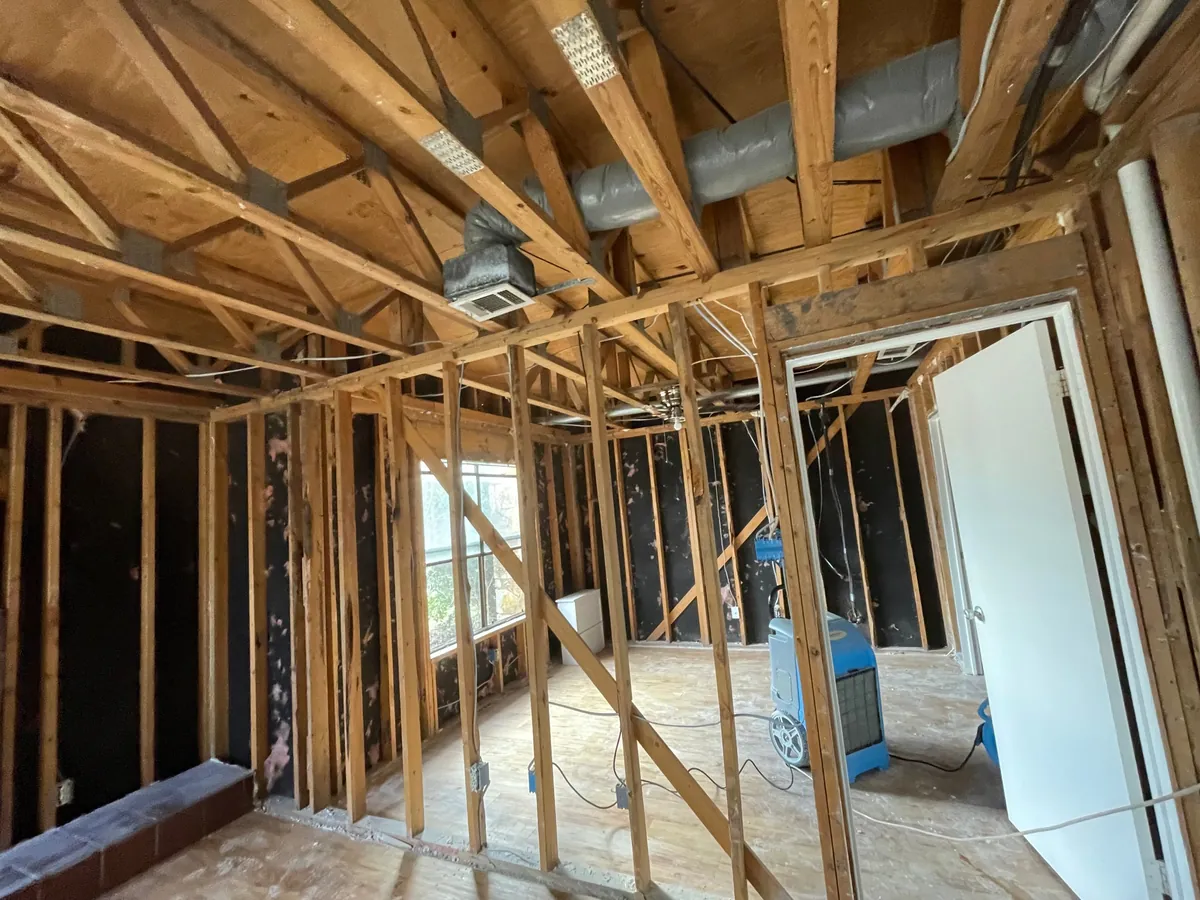
Commercial dehumidifier drying a room opened to the studs during water damage restoration in Jonestown, TX
Dehumidifier running in a room opened to the studs.
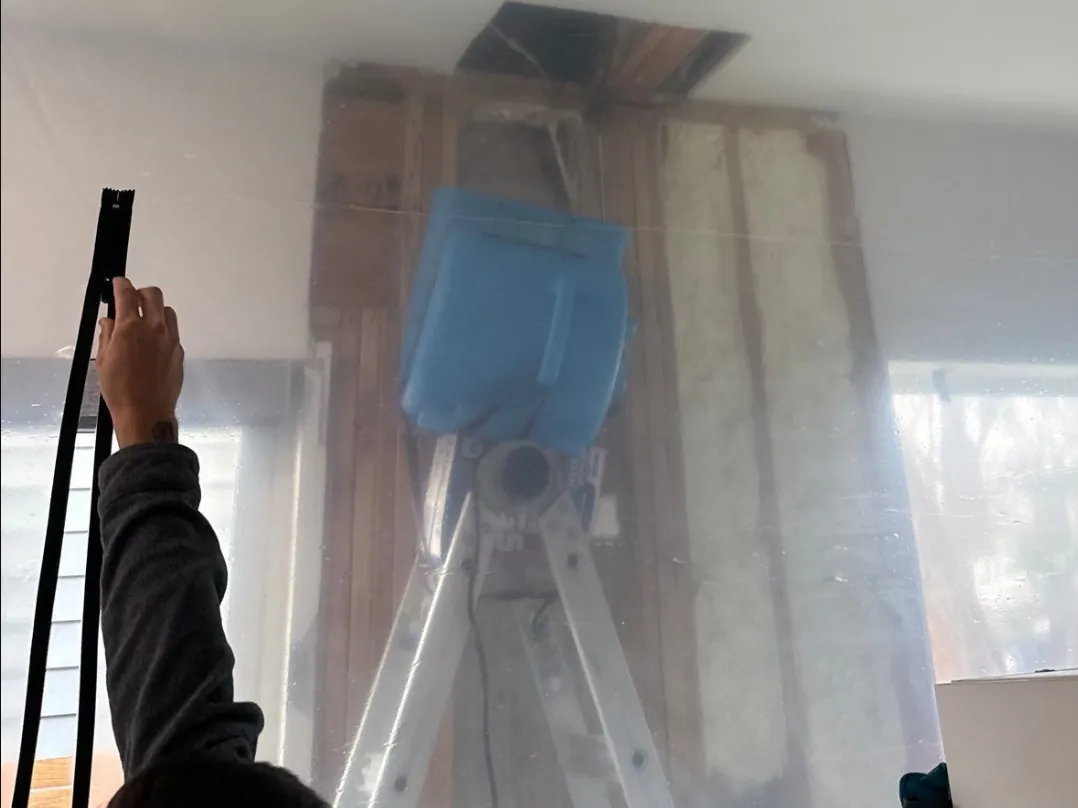
Plastic containment and an air mover drying an opened wall cavity in a Jonestown, TX home
Containment up and an air mover aimed into the wall cavity.
Water-damaged ceiling sagging and peeling after a leak in a Jonestown, TX home
A sagging ceiling is water that has been sitting above it.
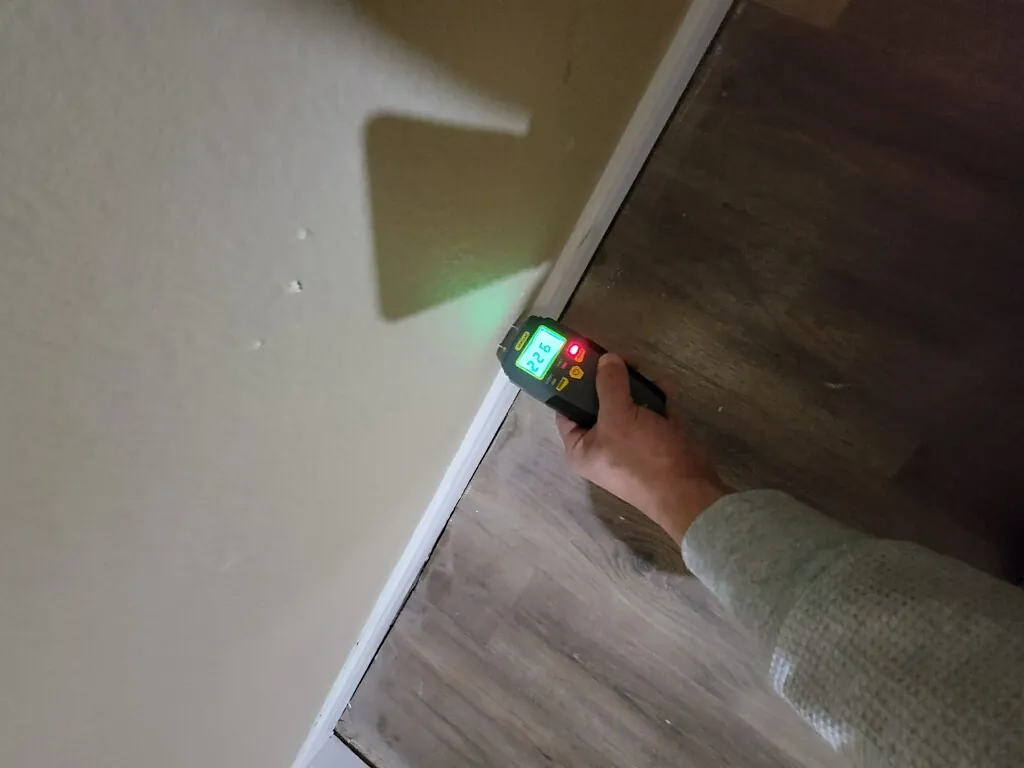
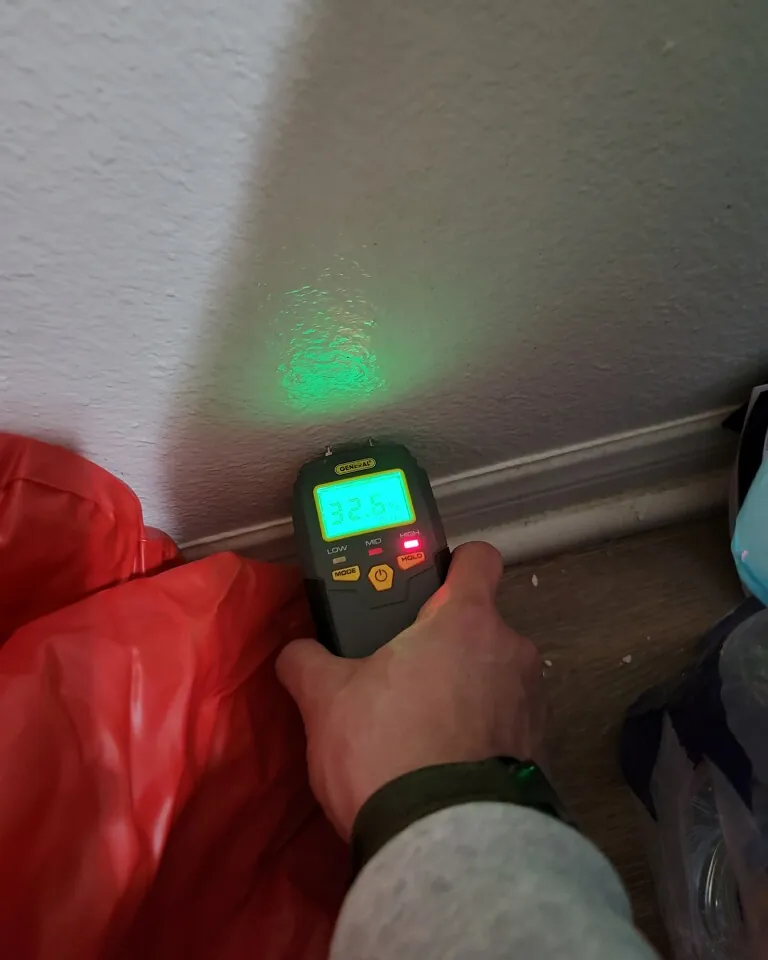
Moisture meter reading 32.6% on a wet wall during a water damage inspection in Jonestown, TX
32.6% on drywall—far above dry. We keep measuring until it is.

Insurance claims

Documentation your adjuster can use.

You open the claim with your insurer. Anthony collects the wet-bulb readings, moisture maps and daily moisture logs in the field; Jessica turns them into a file written the way carriers expect. She builds a complete line-item scope, compares it to the carrier's loss report, and supplements anything missing—so you are not paying for work the first estimate left out. How we help with insurance claims.

Questions

Water damage in Jonestown: common questions

Can you get to Jonestown quickly for an emergency?

Yes. Jonestown is on FM 1431 between Cedar Park and Lago Vista, inside our service area. We answer 24/7 and give you a real arrival window on the first call. While you wait, shut off the water and photograph everything.

My Jonestown home is a weekend or lake house. What should I do about a leak I found when I got there?

Shut off the main, take photos before you move anything, and call. A leak in a home that sat empty may have been running for days, so water has usually traveled into walls, subfloor and cabinets. We measure where it went before anything is removed and document it for your insurance claim.

How fast can you get to my Jonestown property?

We answer around the clock, including nights, weekends and holidays, and give you a real arrival window on the first call. While you wait, stop the source and photograph everything.

Will my homeowners insurance cover water damage?

Usually, if the cause was sudden and accidental, like a burst pipe or failed supply line. Usually not for rising floodwater, long-term leaks, or deferred maintenance. We document the loss the way carriers expect and meet your adjuster on site, but coverage decisions come from your policy.

Do I have to use the restoration company my insurer recommends?

No. In Texas you choose your contractor. You can hire an independent company and your claim is handled the same way.

Can you do the repairs too, or do I need a second contractor?

We do both. Extraction, drying and the rebuild are one scope with one point of contact, so nothing gets lost between a mitigation company and a separate builder.

Who will actually be at my property?

Anthony Schlessinger—co-owner, an IICRC Water Damage Restoration Technician and InterNACHI Certified Master Inspector—is on-site for every job. He takes the moisture readings himself, checks the dry-out every day, and moves fans or adds equipment when the readings call for it. Jessica Acosta-Schlessinger, owner, builds the scope of work for your insurance claim. You are not handed off to a subcontractor you have never met.

What do water categories and classes mean?

Under the IICRC S500 standard, category describes how contaminated the water is (1 is clean, 3 is sewage or floodwater) and class describes how much of the space is wet and how deeply water soaked in. Together they decide what can be dried in place, what must be removed, and how much drying equipment the job needs.

How do you know when my home is dry?

We measure the same material in an unaffected part of your home to set a dry standard, then log readings at marked points every day until the wet materials match it. You get those readings for your insurance claim.

Do you fix the leak that caused the damage?

We find and document the source—plumbing, HVAC condensate, roof or envelope—and make sure the right repair is made before we rebuild, so you are not drying the same room twice.

24/7 emergency response · Jonestown

The damage is still spreading while you read this.

Call now for a real arrival window—or request an inspection if the water has stopped and you want to know what it did.

Call for restoration help · (512) 838-4236