
Keep people out of unsafe or affected work areas.
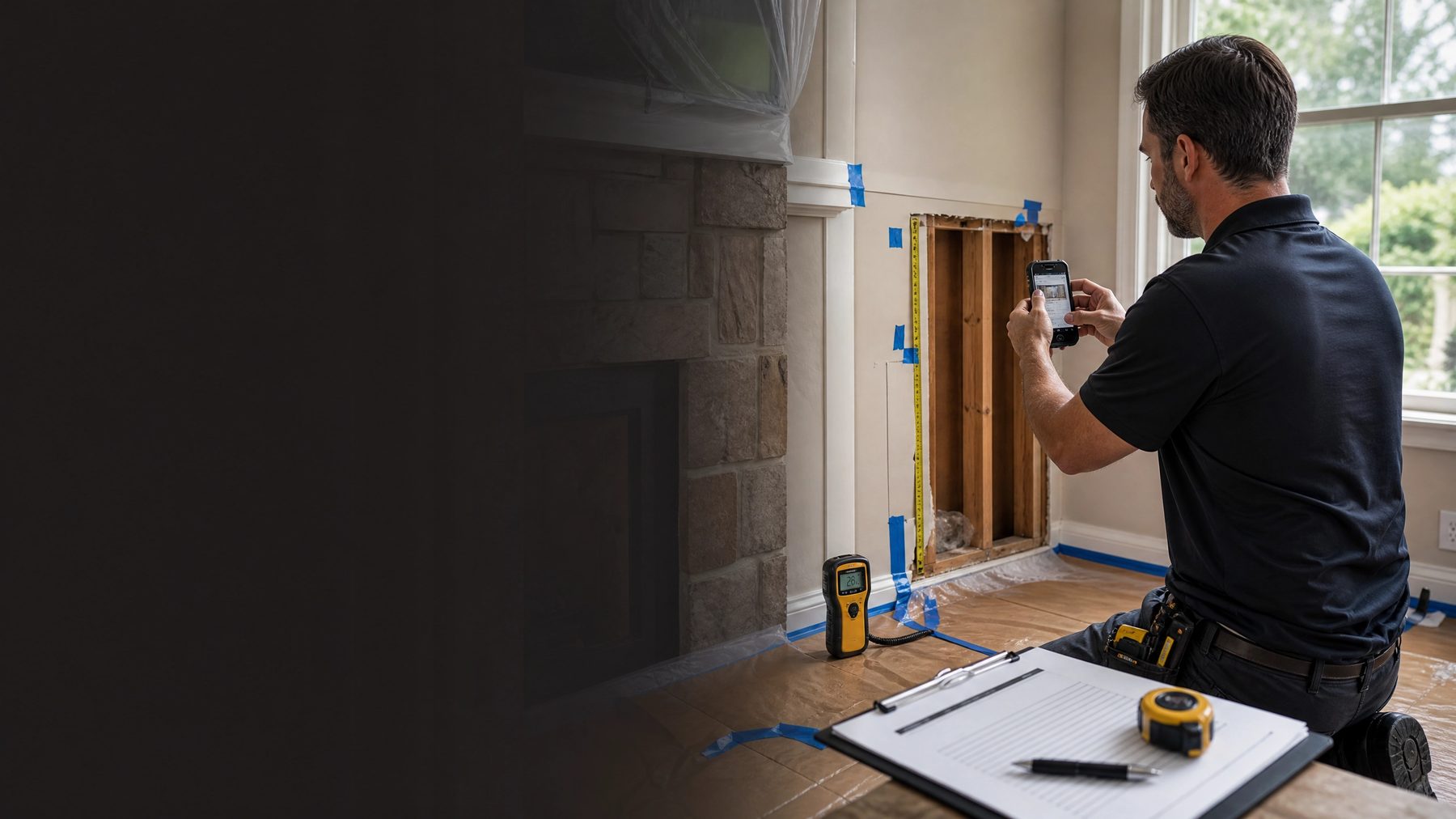
Insurance claim assistance
Insurance claim documentation for Austin property damage.
Property owners often face unfamiliar terms, changing site conditions, and multiple trades. They also face decisions that mix needed repair with desired improvement. Our role is to make the construction side clear through organized documentation, scopes, and communication. We provide contractor-side documentation and coordination. We also keep elective upgrades clearly separate from covered repairs. Austin Remodel and Restoration is led by a Certified Master Inspector.
We comply with Texas law by never acting as a public adjuster. A property loss in Central Texas calls for clear, factual information about the building's physical state. We focus entirely on the construction realities. We provide the detailed, objective records needed to define the baseline scope of work. We document the damage, materials, and needed repair sequences step by step. This helps property owners and their representatives set a clear foundation for reconstruction.
Request a project review
Tell us what happened at the property.
Share the property details and the team will review the request.
For urgent damage, call (512) 838-4236 →Evidence registerConditionDocumentationStabilizationRepair
What to do right now
Prevent conditions from getting worse when it is safe to do so.
Call and document the rooms, materials, and timing involved.
01
Create a usable condition record
Dated photographs, room-by-room notes, measurements, material descriptions, and the sequence of observed work help define what the project team is responding to. A thorough record establishes the condition of the property immediately following the event, which is essential for accurate scoping and planning. We capture visual evidence of structural impacts, moisture levels, and finish damage before any temporary protection or demolition obscures the facts. This is especially important for water damage restoration where conditions change rapidly.
In the Austin area, fast response and immediate documentation are critical. Our humid climate can cause secondary damage. We use detailed moisture mapping and extensive photo logs to capture the property's condition. This way, every part of the physical damage is recorded. It gives all parties in the recovery effort a reliable reference point.
02
Keep repair and upgrade decisions distinct
A carrier’s coverage determination and an owner’s remodeling choices are not the same scope. We identify elective selections and added work separately so the construction plan remains understandable. When an Austin homeowner chooses to upgrade their kitchen or bathroom during a reconstruction project, we maintain distinct documentation tracks. This ensures that the baseline repair scope is clearly defined and priced independently from the new, owner-directed improvements. If you decide to pursue kitchen remodeling or bathroom remodeling during the process, those scopes are documented separately.
We strictly separate the repair of covered damage from elective remodeling. This removes confusion and keeps the construction plan clear. The separate tracking covers everything from material selections to labor costs and scheduling. You may be replacing standard fixtures with premium upgrades or changing the floor plan. Either way, our documentation draws a clear line between two things. One is returning the property to its pre-loss condition. The other is carrying out new design choices.
03
Coordinate without overpromising
We can participate in site meetings, answer contractor-scope questions, and provide supporting construction information. We do not interpret policy language, guarantee coverage, or act as a public adjuster. Texas law requires a strict separation between contractors and public adjusters. We focus entirely on the physical realities of the building—measurements, materials, building codes, and repair sequences—leaving policy interpretation to licensed insurance professionals.
Our role is to serve as a reliable source of construction facts. We provide the detailed scopes, estimates, and physical assessments that property owners and their representatives need to understand the required repairs. We do not make promises regarding coverage outcomes or attempt to negotiate on behalf of the insured. This clear delineation of responsibilities ensures that our documentation remains objective and focused solely on the technical requirements of the restoration project.
04
Establish the baseline scope
Before any work begins, we outline the exact steps needed to return the property to its pre-loss condition. This baseline scope is the foundation for the construction plan. It details the specific materials, labor, and sequencing the repair requires. Setting this baseline early creates a clear reference point. It helps all parties understand the physical needs of the restoration. That holds true for minor repairs or extensive fire damage restoration.
The baseline scope accounts for local building codes, structural requirements, and the materials originally in the home. In Central Texas, this often means addressing unique architectural features. It can also involve construction methods common to the region. A clearly defined baseline sets a firm standard for the repair work. It keeps the reconstruction focused, organized, and fully documented from the start.
05
Document the repair sequence
The order of repairs matters as much as the repairs themselves. We document the planned sequence of work, from structural stabilization to final finishes. This keeps trades from working over one another. It also makes sure framing, waterproofing, and other foundational elements are done right before cosmetic finishes go on. Proper sequencing is critical in the Austin area because of our specific local conditions.
A well-documented repair sequence is essential to the integrity of the reconstruction project. We detail the logical order of tasks. Critical path items, such as electrical and plumbing rough-ins, are completed and inspected before walls are closed. This organized approach reduces delays and the risk of rework. It also gives the whole construction team a clear roadmap. The result is a more efficient and effective restoration process.
06
Track changes and supplements
Construction projects often uncover hidden conditions once walls are opened. When this happens, we document the new findings as carefully as the first inspection. We record the condition, the needed change in scope, and the matching change to the construction plan. This ongoing documentation gives a clear, dated record of why the plan changed. It also shows what physical conditions drove the change. This often happens during storm damage restoration.
Hidden damage, such as structural decay or undetected moisture intrusion, needs immediate attention and precise documentation. We use updated photos, revised measurements, and detailed notes to capture these new findings. Tracking these changes keeps the construction plan accurate. It also makes sure all needed repairs are part of the overall scope of work. This prevents surprises and keeps the project transparent.
07
Finalize the completion record
At the end of the project, we compile a completion record that details the finished work. It includes final photos, material specifications, and confirmation that the work matches the agreed scopes. This record gives the property owner a full summary of the restoration and any elected remodeling. It serves as a lasting reference for the property's updated condition following post-damage reconstruction.
This final documentation package is an essential part of the restoration process. It confirms that all repairs were done according to the agreed scope. It also gives a detailed account of the materials and methods used. The completion record serves as proof of the finished work. It also offers useful information for future maintenance or remodeling. This helps keep the property's history accurate.
08
Central Texas specific documentation
In the Austin metro area, specific environmental and regulatory factors must be documented accurately. We account for local weather event impacts. We consider clay soil when foundations are involved. We also follow the actual permitting requirements of your jurisdiction, whether you are in Austin, Round Rock, or Cedar Park. This Central Texas focus makes sure the documentation reflects your property's real-world conditions.
Knowing the local building environment is crucial for accurate scoping and planning. We are familiar with the challenges of the region's climate, soil types, and municipal rules. We build this local knowledge into our documentation. This gives a more precise and realistic assessment of the required repairs. The construction plan is then tailored to the unique traits of your Central Texas home.
Project sequence
A documented path from first review to final walkthrough.



Questions answered
Frequently asked questions
Do you negotiate with my insurance company?
No. Under Texas law, a contractor cannot act as a public adjuster or negotiate a claim on your behalf. We provide detailed, contractor-side documentation—such as moisture logs, photographs, and repair scopes—that you or your licensed representative can share with your adjuster.
What is the difference between a contractor and a public adjuster?
A public adjuster is licensed by the Texas Department of Insurance to evaluate and negotiate your claim with your carrier. A contractor is responsible for assessing the physical damage, defining the repair scope, and performing the construction work. We handle the construction side exclusively.
Can I upgrade my finishes during the reconstruction?
Yes. Because we are also a remodeling company, we can manage elective upgrades while the walls are open. Examples include a new bathroom layout or upgraded kitchen cabinets. We keep the pricing and scope for these upgrades completely separate from the baseline repair work.
What kind of documentation do you provide?
We provide a comprehensive condition record, which includes dated photographs, room-by-room notes, moisture readings, and an itemized construction estimate. This documentation focuses on the physical realities of the damage and the required repair sequence.
Will you meet with my adjuster on site?
Yes. We are available to meet with your adjuster at the property. We can answer specific questions about our repair scope and the materials involved. We can also explain the physical conditions we observed during our inspection.
What happens if you find more damage after work starts?
If we uncover hidden damage once walls or floors are opened, we pause right away. We document the new findings with photos and notes. We then update the repair scope to reflect these hidden conditions before we continue the work.
Do you guarantee that my claim will be covered?
No. Coverage decisions are made entirely by your insurance carrier based on your specific policy language. Our role is limited to providing accurate, professional documentation of the property's condition and the required repairs.
Austin-area service
Check coverage for your property.
Service availability depends on location, project type, access, and current scheduling.
View service areasRequest a project review
Request a restoration project review.
Share the property details and the team will review the request.
For urgent damage, call (512) 838-4236 →